When I first set out to restore the recipes in the journal that became “Sentimental Sweets,” I focused my research on the kitchen equipment and ingredients available during the Great Depression.
But one discovery led to another, and I found myself on a historical scavenger hunt, leafing through many excellent books written on the subject. One of the most helpful books that I have run across is Ellen M. Plante’s 1995 book, “The American Kitchen: 1700 to the Present.” This book introduced me to aspects of historical baking that I had never even considered. Baking evolved from using the hearth to a wood or coal-burning stove, then to the modern gas and electric stove. A plethora of time-saving products were introduced during the late 1800s, including baking powder, packaged yeast, and cake flour.
But how did early bakers discover all these incredible inventions?
The modern consumer is all too familiar with advertising tactics. The first radio ad was broadcast in 1922 and was a 10-minute commercial promoting the Queensboro Realty Corporation’s Nathaniel Hawthorne Apartments in Jackson Heights, New York. (Was this the predecessor of the modern infomercial?)
The first TV advertisement was in 1941 and featured the Bulova watch. Short and sweet, it was a ten-second spot that stated, “America runs on Bulova Time.”
Now, let’s go back further in time. Before the advent of radio and television ads, women’s magazines were a primary source of advertising for household products. Early circulation began in the US around 1828, with Godey’s Lady’s Book becoming popular by 1837. Advertising in women’s magazines became more commonplace around 1850.
But what about the Victorian housewife (1837-1901)?
How did she learn of all the exciting new products and breakthroughs that were now available for her kitchen?
Trading Cards.
No, not Babe Ruth or Mikey Mantle trading cards, but trading cards from Pillsbury, Eagle Brand Condensed Milk, and Arbuckle’s Coffee, just to name a very few.
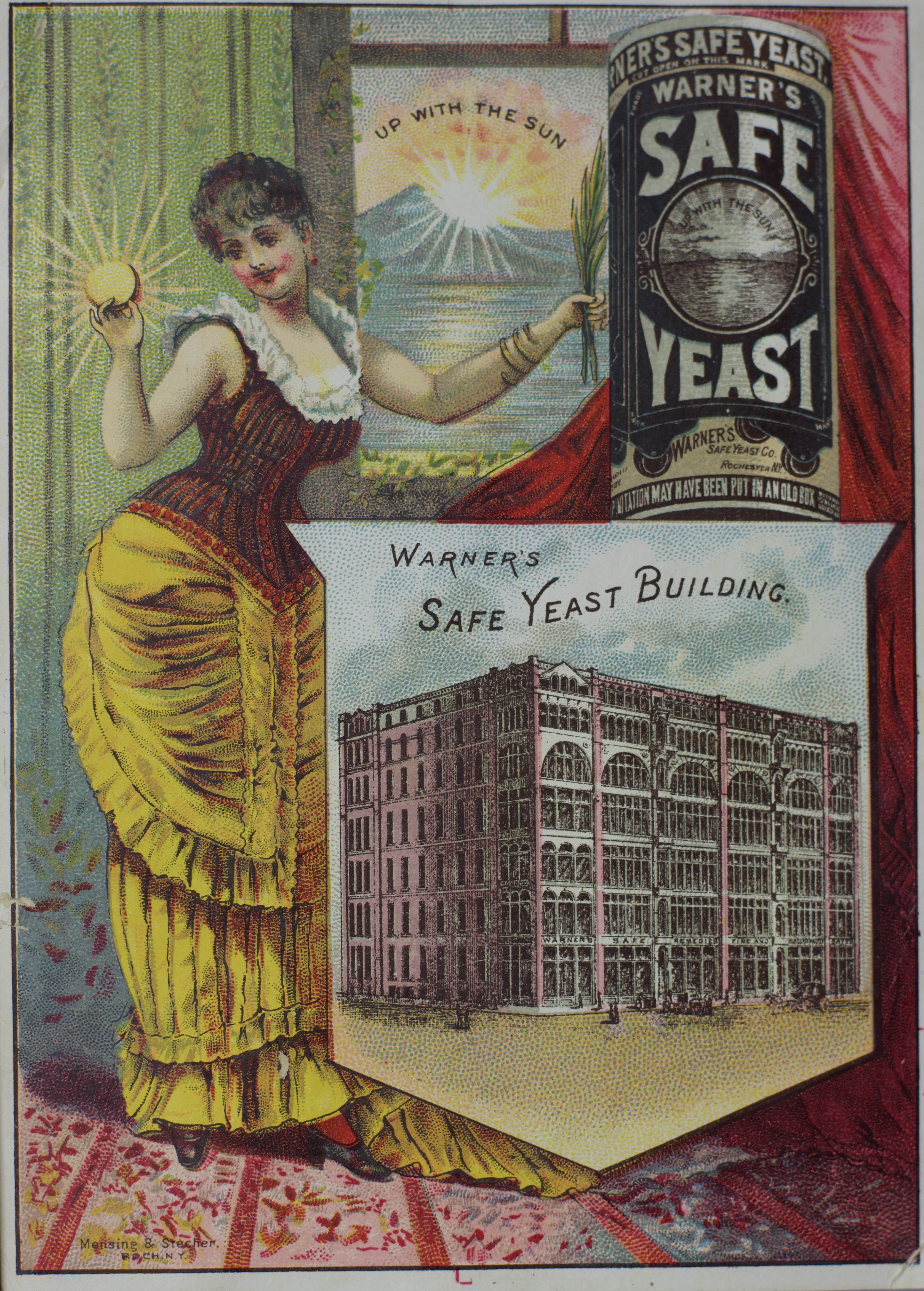
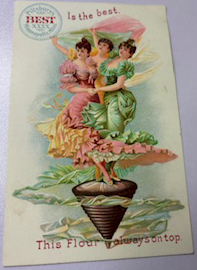
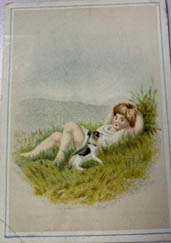
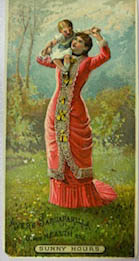
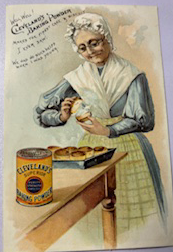
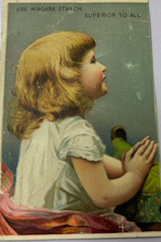
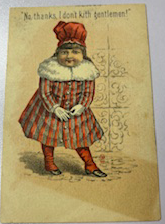
In the late 19th century, manufacturers produced colorful chromolithograph cards to promote their products. These were distributed free of charge by the US Postal Service, merchants, door-to-door salesmen, or even youngsters stationed on busy street corners. The front side featured an attractive, eye-catching image (that often had nothing to do with the product that it was promoting; it was just pretty).
The back side featured product information and household hints. Eventually, recipes were printed on the back (and now you have to keep it!)
Advertising trading cards became a popular Victorian collectible frequently saved in scrap albums by both women and children, with their heyday spanning the years 1876 to 1904. By the early 1900s, advertisements in women’s magazines had taken the place of the trading card. But they are still out there! Once I learned about Victorian Trading Cards, I started searching (where else…) eBay. And there they were. Of course, I have started my own collection, which I’ll share with you in this article. I would love to hear from you if you’ve been inspired to collect a few of your own!
For further reading:
https://www.pbs.org/opb/historydetectives/feature/trade-cards
Plante, Ellen M. (1995) The American Kitchen, 1700 to the Present. Facts on File, New York.